So here I am, my first official assignment at college. Two weeks ago I couldn’t even imagine what college life would be like. Would I be scared? Nervous? Would I have friends? How would life be without my family by my side every day? Well, I’ve been immersed in this new experience for about a week now and my questions are nowhere near to being answered, but a few are. I know that I am scared and nervous. I have a couple of good friends. Life without Mom and Dad is different, but life is overall, okay. Being introduced to a new lifestyle is always a daunting thought. Coming into the big city of Orange County was a daunting thought. How could I, a 17-year-old girl from the outskirts of a small town that is used to mudding and barn barbecues, get used to large city life? As an outsider, Los Angeles seemed like a place for the complete opposite of me. My reasoning for attending Chapman University are vast, but one reason that drew me in, the most is that I wanted to travel outside of my comfort zone. To me, the idea of traveling is doing anything that is outside of your daily routine, and that pushes your comfort zone. Traveling should create new experiences that allow you to learn and grow. When determining what classes I wanted to sign up for I knew that I wanted to experience my major courses a lot, but I also knew that I wanted to dip my toes into different classes to gain a more cohesive knowledge. I was drawn to this course because I was intrigued by the idea of having a class that had a singular focus. I also believed that this course would let me explore my experiences through a creative outlet. In this course I expect to broaden my knowledge of different views of travel from my peers and learn more about ways to express my experiences through various mediums. I am most nervous about sharing my work with my fellow peers, but I also feel motivated to make sure my work is of good quality because of this. As the year progresses, I hope to gain more confidence in my work and to strengthen my critiquing skills on others work.
So here I am — a college freshman with no predetermined expectations or judgments, just a fresh start. I am not sure what the future holds for me, but I know I will have many more questions and experiences that push me outside my comfort zone, but I am ready to start my journey.
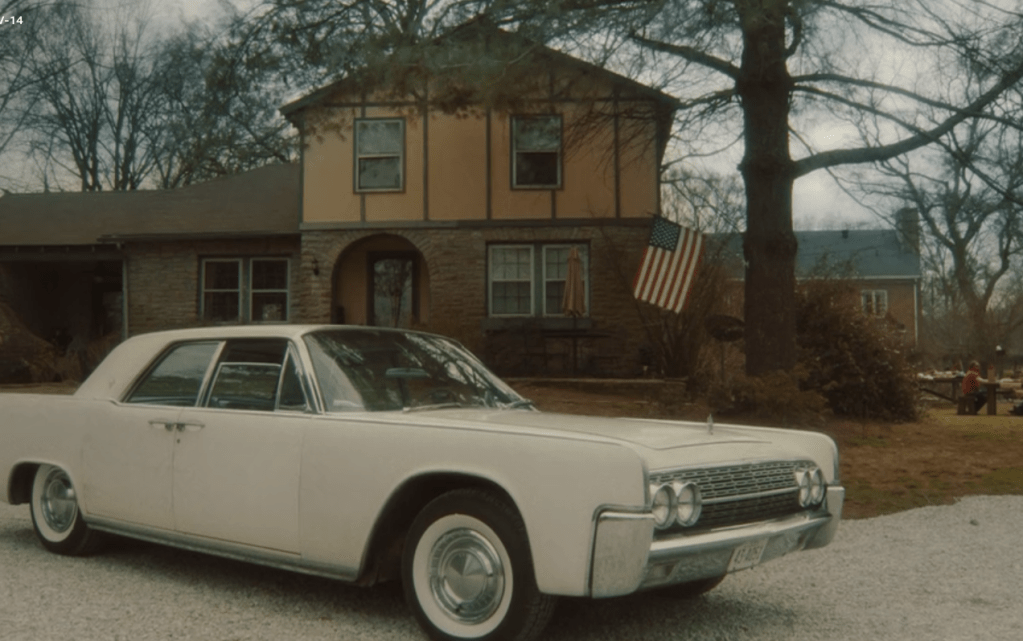
A fast paced montage sets the tone of an episode of Anthony Bourdain Parts Unknown episode entitled Nashville. Clips of bars, heavy foods, cars, music, and fried chicken flash across the screen. The episode then begins by showing a stereotypical ranch house with an American flag hanging from it and a voice over describing Nashville as “friends, family, kicking back and drinking beer, and cooking over the fire pit”. This quotation sets the intention of the episode because the episode is centered around the ideas of community and stereotypes.
Family
Friends
American Pride
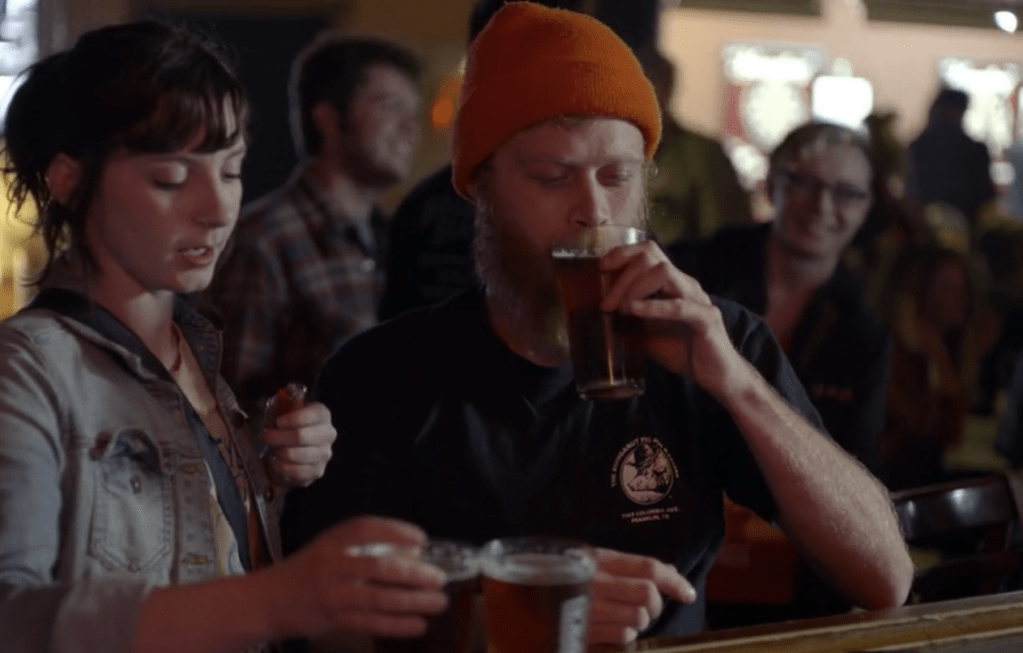
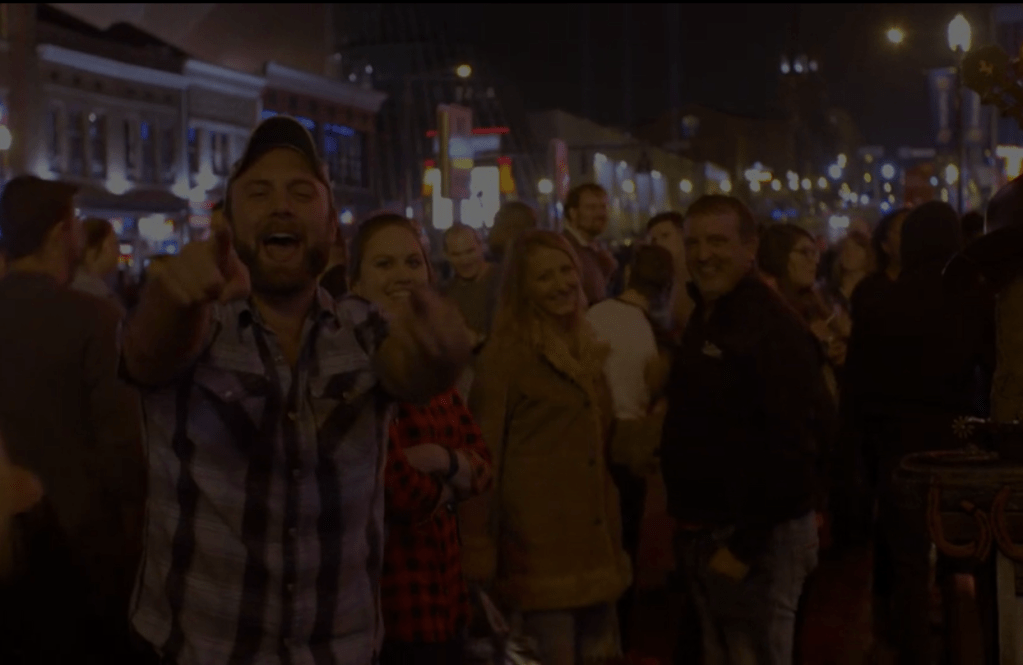
Stereotypes that are portrayed during the episode are classic country stereotypes. Boots, beer, white men, trucks. All the basics. However, Bourdain also attempts to show viewers a more in depth perceptions on what Nashville is actually like. He is able to dive deeper into the real lives of people from Nashville and deconstruct stereotypes.
Beer
Music and Parties
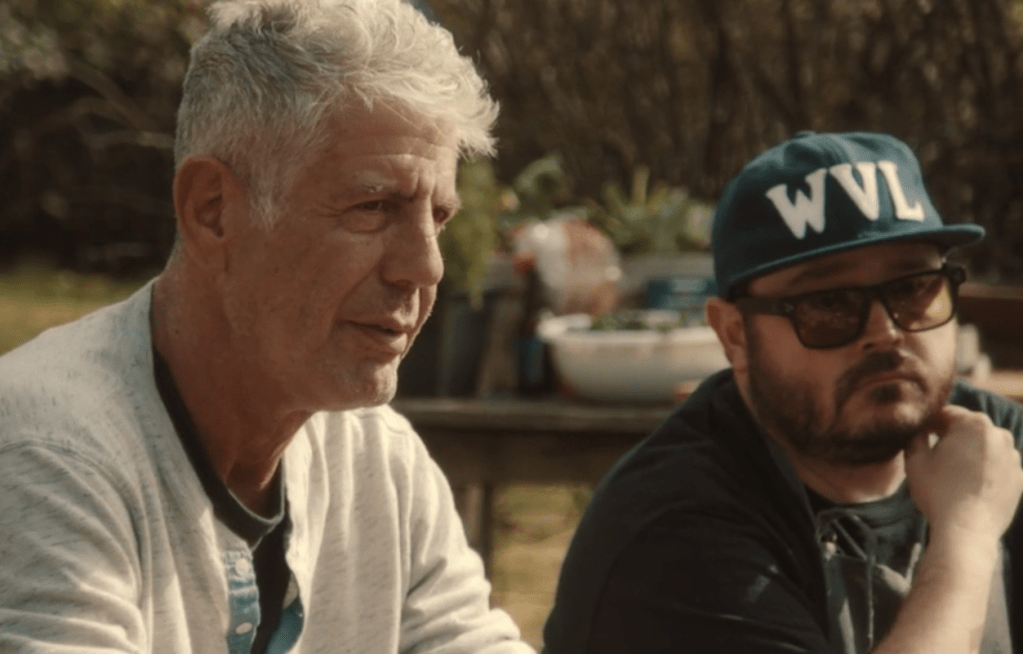
White Men
Since Nashville is located in the South I think that people associate it with not being a very diverse place, but Bourdain depicts Nashville as a very diverse place. Many of the people who Bourdain talks to throughout the episode are not locals. I believe this is done on purpose in order to show the more diverse grouping of people living in Nashville. One man that Bourdain talked to in the episode was Jesse Boyce, an African American producer and CEO. He explained to viewers that their is more than just country music in Tennessee. Bourdain breaks down musical stereotypes of Nashville by differentiating Her Haw music and Night Train music. He discusses what Night Train music is and how it differentiates from country (Hee Haw) music. Night Train was the African Americans genre of music that emerged at the same time as classic country music, however is often looked over in Nashvilles musical history. Because Boyce is an expert in the music field he is a creditable source for this information which is Bourdain using ethos to help get his message of diversity in Nashville across to viewers.
Example clip of the Night Train tv show where a more diverse group of people preformed their music,
There is also a constant emphasis on the ability for one to be able to create success in Nashville regardless of their prior life situations. Nashville is made to look like a safe spot. A haven for anyone and everyone who wants it. The cities values that are depicted in the episode are community, diversity, and growth. Community is the first value that I was able to pick out from the episode. During the duration of the episode all of the events shown were centered around the idea of gather and socialization. Whether it was gathering for a meal, a party, or just for fun people were always together. My family is from Chattanooga, Tennessee, so when I think of the south I think of family and traditions so this value made a lot of sense to me. One example of community shown in the episode are dive bars. A dive bar is “neighborhood bar where local residents gather to drink and socialize”. I think that adding in scenes like this to the episode was to portray to readers that Nashville is an open place where everyone is welcomed because in these scenes people of all different backgrounds were included and always looked as if they were having a good time.
I wanted to compare my termanistic screens to Bourdain’s through the episode. From doing this I found that our screens were very similar. Bourdain opens up viewers eyes to see the real Nashville, not as the glamorized music city that it is often portrayed to be. I felt that he nailed it on the portrayal of Tennessee. Bourdain is able to portray Nashville as a community based place with wholesome values and opportunity.
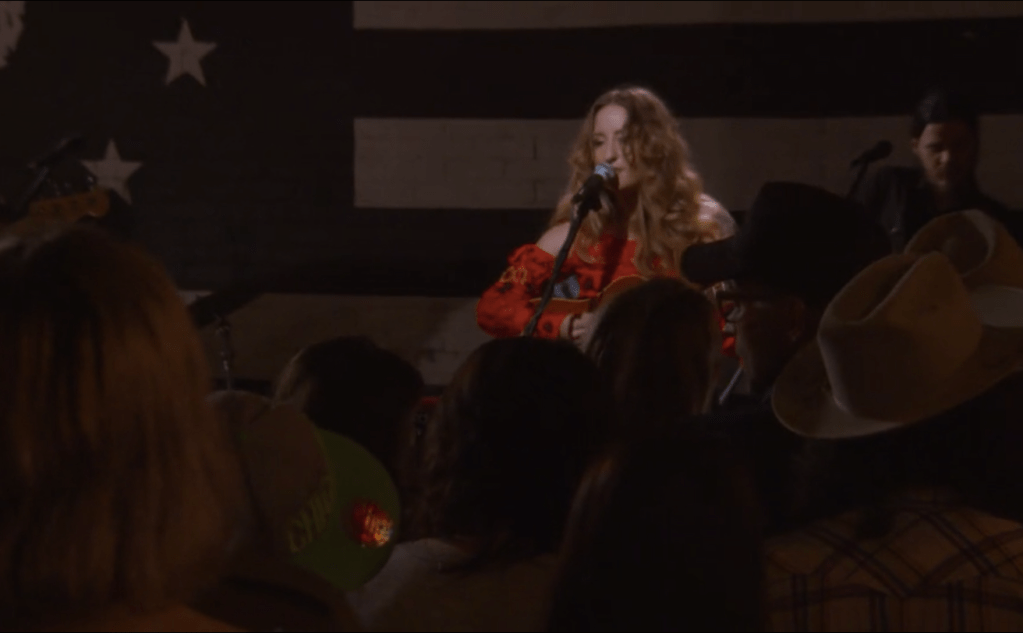
As the episode fades to ends a dive is shown with country singer, Margo Price, strumming her guitar to one her songs. Although this scene screams Nashville. With the screen being filled with cowboy hats, boots, an American flag in the background, and of course the country music. To me this is not an effective ending to if Bourdain’s goal was to break the stereotypes of Nashville. It loops back to the stereotypical views of what people think Nashville is. Ending with something less mainstream such as a rock band would have been much more effective and would have given a more lasting impact.
I grew up in a Catholic family. So I have always been used to Sunday church and that feeling of community at my church and youth group. As a freshman in college the transition into a new environment has been, to say the least, scary. Nothing is like how my old life was at all.
It’s been about two months now and I still feel as if I haven’t found my “place” at this school, whatever that might mean.
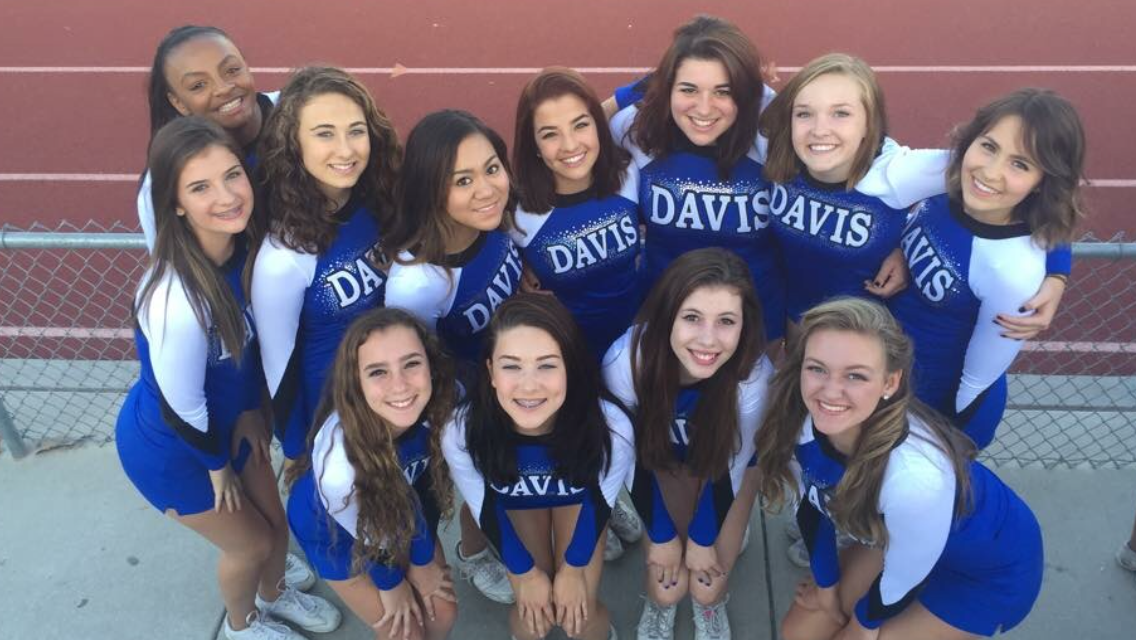
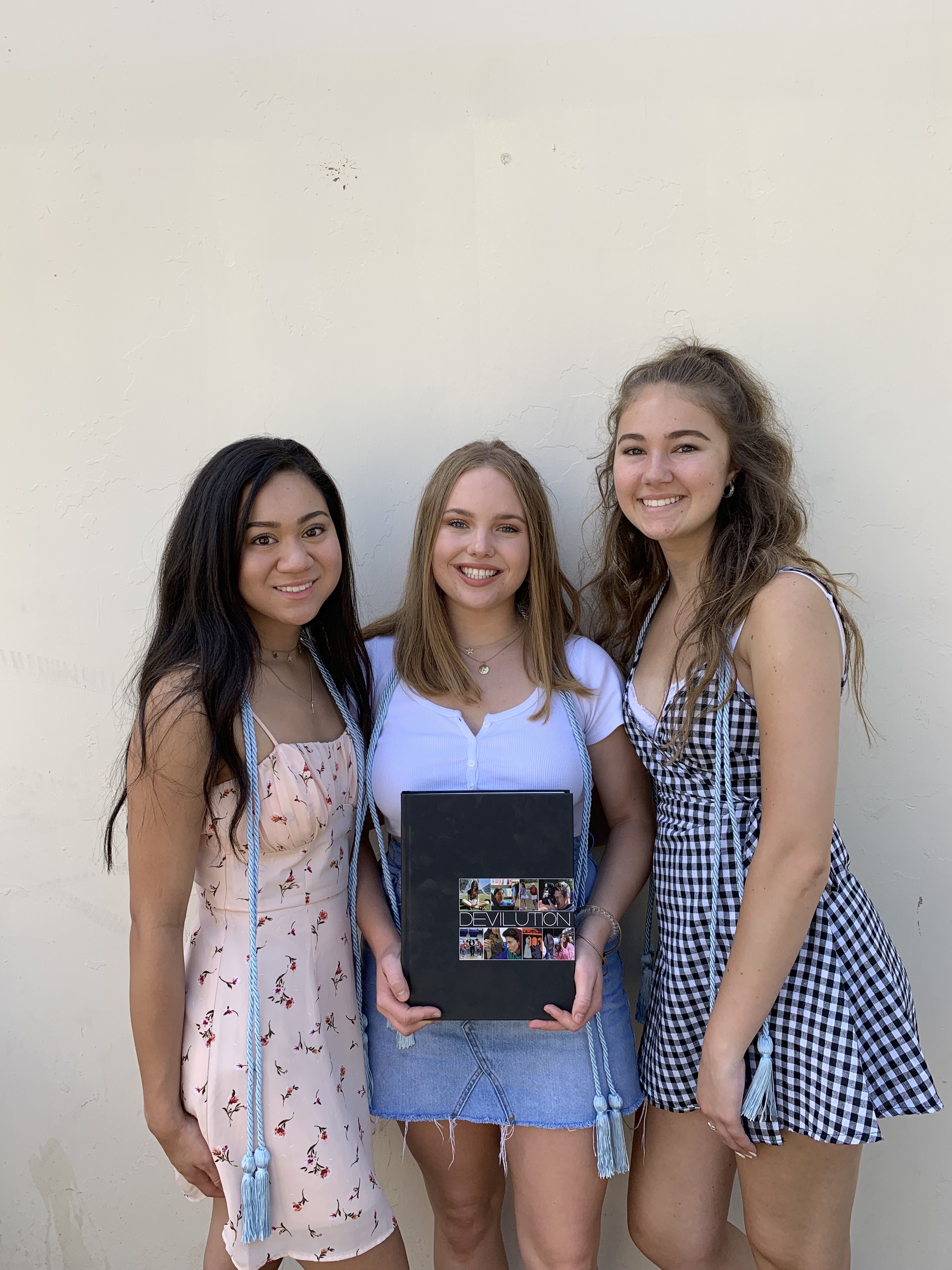
In high school I knew what my “place” was. I was a cheerleader, yearbook editor in chief, and a Jesus loving girl. Alongside that I had my friends that shared the same “place” and values as myself. I knew coming into college that I would no longer have the same life as I did in high school. I wasn’t continuing cheer and was no longer going to be apart of any school publications. However, I still was interested in participating in some sort of religious involvement on campus.
Religion is a topic that can bring up lots of controversy, especially when it is brought up onto a college campus. Personally when deciding on what college I wanted to attend, religion was an important influence on my decision. My mother and my brother both attended Jesuit universities, so it was expected that I would do the same. Coincidentally as decision day approached and I was narrowing down my choices Loyola Marymount and University of San Diego, which are both Jesuit schools, were among my top choices. After a lot of contemplating and research I found that my heart was not calling me to either of these schools.
Chapman University had always been one of my top choices. One factor that reassured me about choosing Chapman is that although it is not a religious affiliated university it is a church-related university. I appreciated the fact that Chapman is open to various types of people and religions and while they do not make it mandatory to attend services or take religion courses.
I discussed this topic with my brother who is currently a senior at Santa Clara University, a Jesuit school. I was curious to see his opinion on if he thought going to a Jesuit school was enhancing his experience in any unique ways. He responded, “yes because they have more of an emphasis on building character than other schools, so that way you come out with more knowledge and morals”. I thought this was an interesting answer because even though I am not at a religious college I feel as if I am still getting some of the same benefits. He also believed that by attending a Jesuit school he was able to, “build more community between students because of the small class sizes and the ability to create stronger bonds with professors”.
Here at Chapman I have found that finding a community to belong to has been a bit of a struggle, so I found it interesting that he believed it was easier to do so at his school. Although these factors all seem beneficial I believe that going to a Jesuit school is not the only way to ensure these benefits.
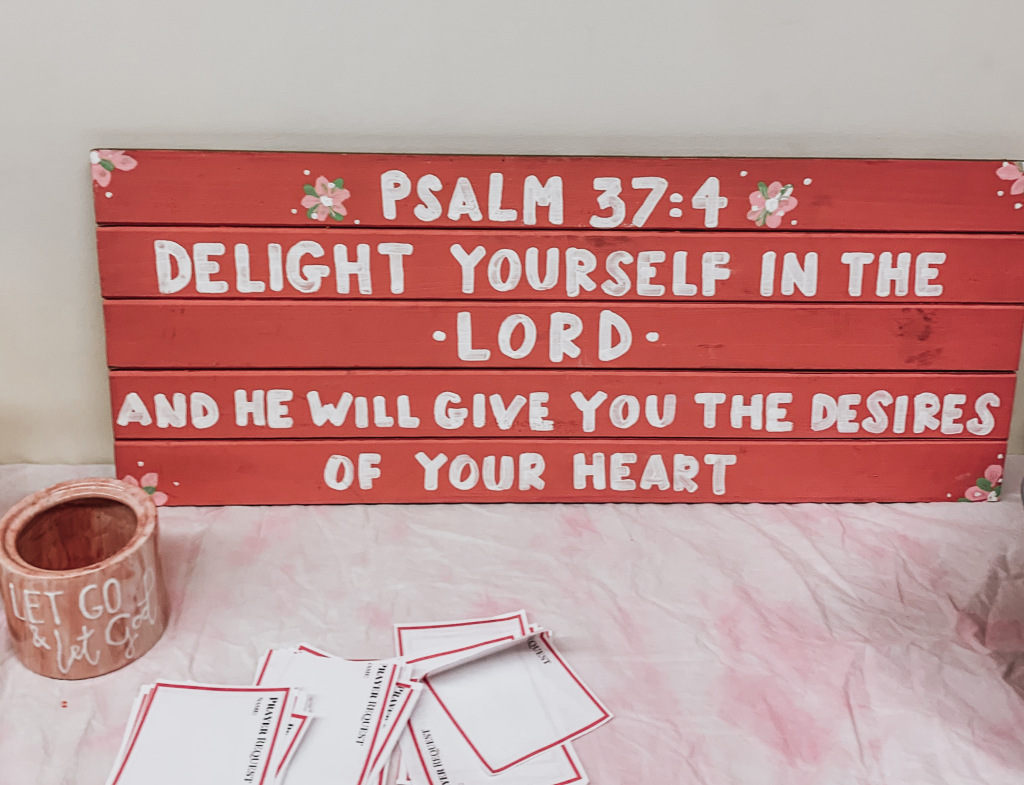
One way I have seen religion on campus benefit myself is through the campus ministry, Delight.
The first time I attended Delight I walked into the room feeling a little nervous. They had already been three meetings and I was afraid that I wouldn’t have a place there. I was happily surprised when I was greeted with a warm welcome from everyone.
The environment was not how I expected it to be. The tables were covered in cute pink decor, snacks were laid out, fairy lights adorned the tables, and lots of blankets covered the floor. The overall feel of the environment was very inviting. They started off with a fun activity and then dove into the story of the week which was about identity. While the leader discussed the reading I felt as I really related to everything she was saying. We then broke off into small groups and I got to see how everyone was so supportive and kind to each other. As the meeting ended with worship and then announcements many of the girls and leaders came to me and introduced themselves with open arms.
I was not expecting to be so in love with a program so fast. All my nerves about not having a place in the club quickly disappeared. There was lots of diversity in the people and the topics discussed which I appreciated and felt very comfortable with. Going to this new place made me feel like less of an outsider. I have learned from this experience that simply going is the hardest part to the beginning of any journey.
Now as the new semester approaches I have been invited back to be a leader at Delight. I was surprised to say the least that they wanted me to be in this position, especially as a freshman. Delight encourages participants to also experience different events with other religious groups on campus which I found very beneficial. This helped me broaden my community here at Chapman. I can now see that being apart of this ministry has been my sense of community here at Chapman. Being apart of a religious group on campus has given me a sense of community and allows me to take a step back and look at the bigger picture which I often feel like I lose sight of while being at college. I feel as if it has also helped me academically because of the guidance I gain from the upperclassmen who participate in the club. One article I found stated that women had the “need for information, for arguments in support of their new ideas, and for ways to discuss ideas such as feminism and social justice within Christianity”. This shows that having religion can help many in their discoveries whether it be self or other.
Religion can be beneficial to all types of people on a college campus. However, a school does not need to be Jesuit to offer the benefits that come coincide it. Religion is helpful in aiding anyone who wants to be apart of it feel connected and grounded with their academics and lifestyles. Especially while transitioning into a new environment like college.
While revising my “So Here I Am” blogpost, I had a moment of shock. Here I was almost five months later revising my very first blog post. The funny thing is that it feels like I wrote that blog post a week ago. Being in the Writing about Travel course has been one of the highlights of my first semester at Chapman University.
I came into this class scared. I have never been a confident writer, despite the fact that I love to write. Knowing that other college students were going to read and critic my work, especially students that were older than me, scared me beyond words. Critics scared me. Discussion scared me. Everything scared me coming into it! However, as time went on I began to realize that there was no reason to be so scared. Everyone in this class was beyond kind and any advice I was given on my work was always sentimental and not deconstructive. I’ve learned that as a writer, I should be confident. Not having confidence is your worst enemy when writing. If you don’t like what you are writing or do not think it holds any value, why would anyone else think different? Being in this course opened my eyes to that I can write in my voice and that you should never feel restricted to writing in a particular style that is often perceived as “right.” I have also learned that as a writer, it is okay to go back and change things. Even if something is your final draft, nothing is stopping you from making something even better. I am so thankful that Savy gave us the opportunity to grow in our writing by encouraging revisions.
My knowledge of travel has significantly grown from this course. I enjoyed the fact that I am leaving this class feeling like I have learned about important topics that I will carry with me. The fact that we focused each week on a new topic and deeply explored meanings and ways to resolve issues was very beneficial. I think going forward and traveling in the future, I will now be a lot more aware of different problems. Whether it is my carbon footprint or trying to interact with locals more – I know there are so many lessons I have learned from this class. My definition of travel has also changed from being in this class. Coming into the course, I only thought of travel as packing a suitcase and going on an airplane to a new location. But I believe now that travel is much more than that. From the new space blogpost, I was able to see that travel can be as simple as going to a new club on campus or visiting a friend’s family that has a different culture than you.
As a class, we defined rhetoric to be “the way that we choose words/imagery/music / tone/audience that can present an idea or a message. It makes the audience feel something; it makes people act, sometimes in unintended ways. Not always noticed, but can be. An art form”. I think it is essential to read, write, and think rhetorically in today’s world because it helps us deliver a message that is personal to us. When we use rhetoric, we are painting a picture to convey to others. It can be a helpful tool in allowing others to see ideas through your eyes and leaves a more significant impact to oppose to not utilizing rhetoric.
Overall, this course has been fantastic. It has opened my eyes to new ideas and viewpoints through the use of blog posts, discussions, and lectures. There was never a day that I didn’t look forward to attending it. The most challenging aspect of this class was diving deeper into my own opinions and viewpoints, but through the help of Savy and all the other students, it wasn’t a barrier. I believe this class helped me develop my style of writing and become a lot more confident in my work.
Thousands of people create travel videos and post them online for the world to see. When people go on vacation, it is typical only to want to document the good parts of the location and trip. However, this can be somewhat problematic because it shows viewers a limited version of what the location is actually.
Don’t get me wrong.
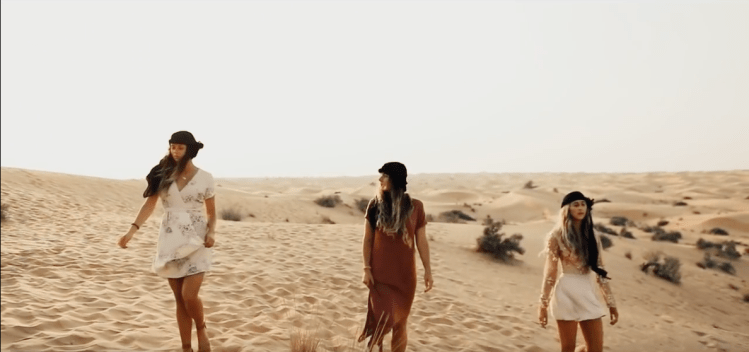
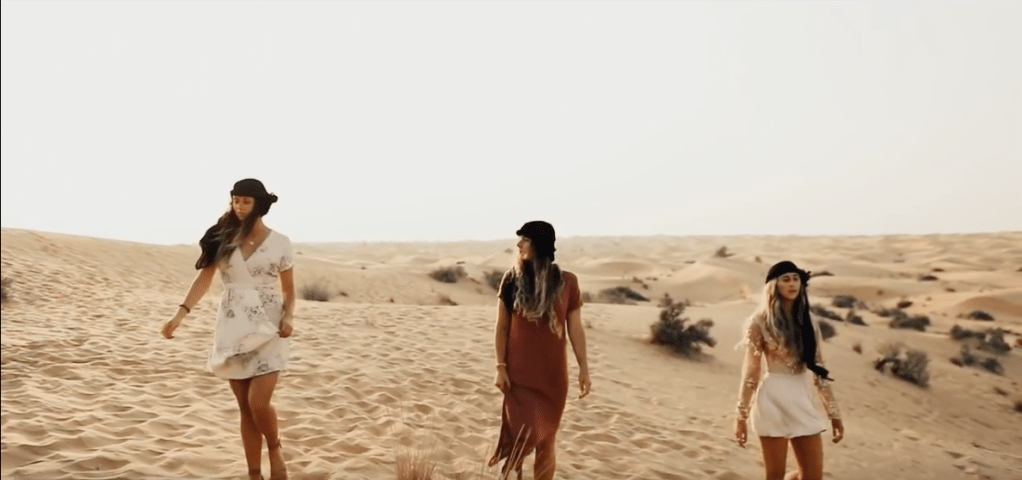
I love watching these beautifully produced videos from online “influencers” of foreign locations. I love the sense of wanderlust that they make viewers feel, but I think because I have always seen these romanticized views of these countries, my idea of what these countries are like is very limited. For example, when I think of Dubai, my mind automatically goes to a video on YouTube by Indy Blue that features a group of young adults experiencing stereotypical activities such as riding a camel and sand surfing.
Screenshots from Indy Blue
If I were to create a travel video, I would include fun experiences as shown in Indy Blues video. Still, I think it would be beneficial to include a section in the video of more authentic experiences. Examples of this could be walking down the local markets and showing how locals actually live and make an income. It could also be beneficial to show some of the aspects of the country that are not as positive. This could range from somehow showing a countries poverty or showing a polluted city or beach. Doing this would allow for a broader, more inclusive, and authentic view that would be shown to viewers.
Doing this also brings up the issue of online sponsorships. Many of the online influencers can go on these fantastic trips because of sponsorships from different companies. From these sponsorships, influencers are required to make a video or Instagram post showing off the product, hotel, or whatever the company asks. They then have to get their posting approved, so this is when adding in less than perfect elements in the video may not even be an option to the creators.
In the Dubai video, nothing was showing the reality of life in Dubai. I found an article that did a great job of showing an honest view of the city, the good and the bad. The article is titled “Booze and bulls***: The dark side of Dubai” by Shitika Anand. There is a quotation in the article stating, “Scrub the sheen off the glass in this concrete jungle, and the truth will melt in your hands. The modern-day slavery in the UAE is painfully obvious, but the propaganda-style tourism videos and Instagram handles will tell you otherwise.” This quote provides insight into how everything that you see on the internet is precisely curated to show you a false view of the country.
“This is the reality most tourists experience — bright lights, fancy hotels and fast cars”
-Anand
Anand describes Dubai as “an unreliable Tinder date.” She dives into the idea that at first, it looks perfect, but when you actually move and live there, it is not all that it seems. There are three different “layers” of life in Dubai. The idealistic class which are the people you think of when you think of Dubai. Locals to the city that are drowning in excessive amounts of wealth. The second layer are rich foreign workers. People who move to Dubai from other countries that hold high paying jobs. For example, CEO’s and bankers. Finally, the third layer are poor foreign workers. These people are never shown as being apart of the Dubai society. Anand says that these workers “do 12-hour shifts at a construction site in the middle of the desert on a 50C day. Their living conditions are overwhelmingly controversial, with four to five workers sharing a shoebox-sized space in the name of a home. Yet they are the men who have given Dubai its gleaming glory”.
From Anand’s article I was able to broaden my knowledge and understand the idea that what you see is not always what you get. We are often fed to see something with a tunnel vision view. It is essential, especially when we travel, to at least recognize that the countries we visit aren’t always what we think they are.
The season is changing. Long hot summer nights are beginning to fade into crisp peaceful autumn days. I have never been a summer girl. Summer is hot, long, and stressful. My favorite time of the year is when summer begins to fade, and autumn and winter come out to play. There is something about autumn and winter days that make my heart flutter. Maybe it’s the colder weather, the cozy nights, or perhaps it’s the holiday season with all its twinkling lights and joyful feelings. Maybe it is because I can finally snuggle up in my oversized jumpers by the fire with a Harry Potter novel by my side. Whatever the reason is, I know that I can relate to the colder months more. It’s quiet, shy, calm- all characteristics that I can relate to.
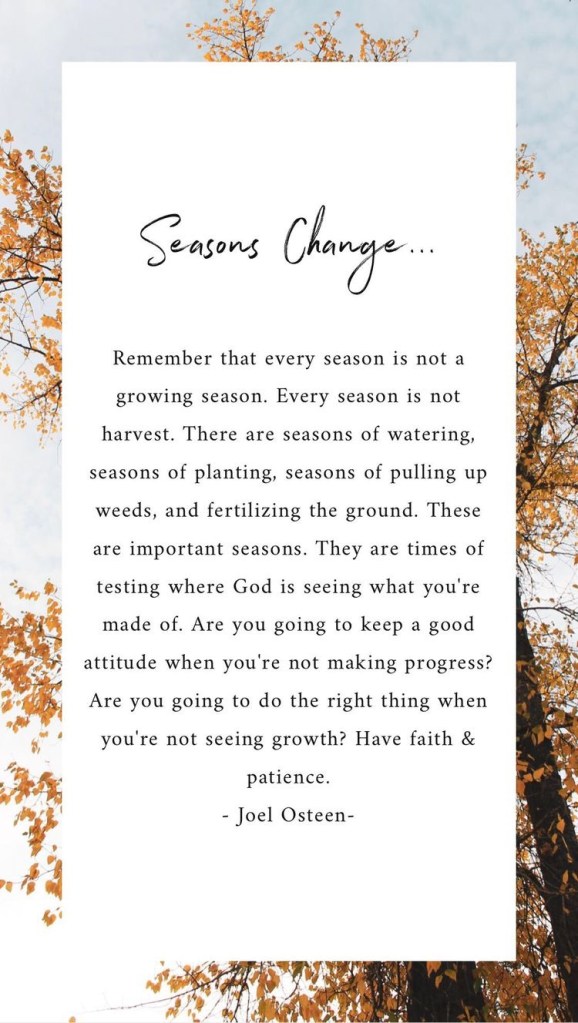
While scrolling through Pinterest, I found a quote about the changing seasons that inspired me to center my blog post around this idea. It says, “Remember that every season is not a growing season. Every season is not a harvest. There are seasons of watering, seasons of planting, seasons of pulling weeds, and fertilizing the ground. These are important seasons. They are times of testing where God is seeing what you’re made of. Are you going to keep a good attitude when you’re not making progress? Are you going to do the right thing when you’re not seeing growth? Have faith & patience” by Joel Osteen. This quote opened my mind up to be more open-minded and self-aware of my actions.
A terministic screen is a way one perceives language. My “terministic screen” is defined by my understanding of the word “season”. I have come to realize that everything we do or say is like a season of our lives. We speak differently as we grow older, whether that be because we learned new vocabulary or maybe even a new language, or that we simply change the style in which we speak or write. Everything we do in life is not permanent. When I look at a piece of writing, I interrupt it differently than you might. For example, when I look at the Osteen quote, I relate it to my life through my terministic screen. I interrupt the quote as a reflection on growing up because of the place I am in life right now.
Through my terministic screen, I would like to believe that I try to have a positive outlook on situations and that when I interpret a situation, I can see the potential in it no matter the circumstance.
I come from a Catholic family, so when the quote discusses difficulties as being God testing you, I felt as if I could deeply relate to it. In this “season” of my life, I have been turning to religion a lot to help guide me. So, whenever I read or do anything, I can often relate it to the idea of God. We all see the world through a pair of theoretical glasses that often get foggy, but I view these hard times as a test from God, and from these experiences, we can continue to grow.
So here I am, my first official writing assignment at college. Two weeks ago, I couldn’t even imagine how college life would be. Would I be scared? Nervous? Would I have friends? How would life be without my family by my side every day?
Well, I’ve been immersed in this new experience for about a week now, and my questions are nowhere near to being wholly answered. I do know a couple of things, though.
I know that thinking ahead to the future scares me beyond words.
I have made a few good friends.
Life without Mom and Dad is different, but life is overall okay.
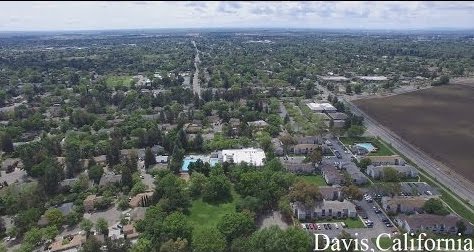
Being introduced to a new lifestyle is always a daunting thought. Moving to Orange County was a daunting thought to me. I’m originally from a smaller town in Northern California called Davis and although I haven’t been in Southern California very long, I can already tell that day to day life is very different here compared to the NorCal lifestyle.
How could I, a 17-year-old girl from the outskirts of a small town that is used to spending her time mudding and out on the horse ranches, adapt to city life? As an outsider, Southern California never piqued my interest because of the stereotypes that I had always associated with it. The fast-paced lifestyle, emphasis on looks, and the awful traffic all turned me off from SoCal. However, somehow, I still wound up at Chapman University. My reasoning for attending Chapman University are vast, but one reason that drew me in the most is that I wanted to travel outside of my comfort zone.
To me, traveling is doing anything that is outside of your daily routine, and that pushes you out of your comfort zone. Traveling should create new experiences that allow you to learn and grow.
When it came time to choose my courses for the upcoming semester, I knew that I wanted to experience a lot of major classes if possible. Still, I also knew that I wanted to take GE courses that spiked my interest to make learning more personalized to my wants and goals. I was drawn to this course because I was intrigued by the idea of having a class that had a singular focus. I also believed that the Writing about Travel course would let me explore my experiences through a creative outlet.
I am hoping that from this course, I broaden my knowledge of different views of travel via my peers and that I learn more about ways to express my experiences through various mediums. From looking at the syllabus, I believe that the weeks that we spend discussing specific topics will be an eye-opener to me.
Sharing my work with my peers has always been something that makes me nervous. However, I feel motivated to make sure my work is of good quality because of this. As the year progresses, I hope to gain more confidence in my work and to strengthen my critiquing skills on other’s work.
So here I am — a college freshman with no predetermined expectations or judgments, just a fresh start. I am not sure what the future holds for me, but I know I will have many more questions and experiences that push me outside my comfort zone, but I am ready to start my journey.
I grew up in a Catholic family. So I have always been used to Sunday church and that feeling of community at my church and youth group. As a freshman in college the transition into a new environment has been, to say the least, scary. Nothing is like how my old life was at all.
It’s been about two months now and I still feel as if I haven’t found my “place” at this school, whatever that might mean.
In high school I knew what my “place” was. I was a cheerleader, yearbook editor in chief, and a Jesus loving girl. Alongside that I had my friends that shared the same “place” and values as myself. I knew coming into college that I would no longer have the same life as I did in high school. I wasn’t continuing cheer and was no longer going to be apart of any school publications. However, I still was interested in participating in some sort of religious involvement on campus.
I went to the club fair in September looking for something to be apart of. I spotted a cute pink tent and was automatically drawn into talking to the girls there. The tent was for Delight Ministries. I spent some time talking to all the girls there and instantly loved what they were about and signed up for their club. As time progressed I found myself always having a conflicting problem with making it to the meetings.
When we were assigned the task to explore a new space I automatically thought of destinations I could go to. My mind jumped from Disneyland to San Luis Obispo to Los Angeles. I was excited to experience something that seemed so new and fun to me, however, time once again got the best of me and I was not able to squeeze out the time to go to one of these fun places. I ended up going to Delight for the first time this week and did not go with the intention of writing this post. However, I was so in love with the experience that I decided I had to write about it.
The night of the meeting I walked into the room feeling a little nervous. They had already been three meetings and I was afraid that I wouldn’t have a place there. I was happily surprised when I was greeted with a warm welcome from everyone.
The environment was not how I expected it to be. The tables were covered in cute pink decor, snacks were laid out, fairy lights adorned the tables, and lots of blankets covered the floor. The overall feel of the environment was very inviting. They started off with a fun activity and then dove into the story of the week which was about identity. While the leader discussed the reading I felt as I really related to everything she was saying. We then broke off into small groups and I got to see how everyone was so supportive and kind to each other. As the meeting ended with worship and then announcements many of the girls and leaders came to me and introduced themselves with open arms.
I was not expecting to be so in love with a program so fast. All my nerves about not having a place in the club quickly disappeared. There was lots of diversity in the people and the topics discussed which I appreciated and felt very comfortable with. Going to this new place made me feel like less of an outsider. I have learned from this experience that simply going is the hardest part to the beginning of any journey.
Religion is a topic that can bring up lots of controversy, especially when it is brought up onto a college campus. Personally when deciding on what college I wanted to attend, religion was an important influence on my decision. My mother and my brother both attended Jesuit universities, so it was expected that I would do the same. Coincidentally as decision day approached and I was narrowing down my choices Loyola Marymount and University of San Diego, which are both Jesuit schools, were among my top choices. After a lot of contemplating and research I found that my heart was not calling me to either of these schools.
Chapman University had always been one of my top choices and something that reassured me about choosing Chapman is that although Chapman is not a religious affiliated university it is a church-related university. I appreciated the fact that Chapman is open to various types of people and religions and while they do not make it mandatory to attend services or take religion courses.
I discussed this topic with my brother who is currently a senior at Santa Clara University, a Jesuit school. I was curious to see his opinion on if he thought going to a Jesuit school was enhancing his experience in any unique ways. He responded, “yes because they have more of an emphasis on building character than other schools, so that way you come out with more knowledge and morals”. I thought this was an interesting answer because even though I am not at a religious college I feel as if I am still getting some of the same benefits. He also believed that by attending a Jesuit school he was able to, “build more community between students because of the small class sizes and the ability to create stronger bonds with professors”. Here at Chapman I have found that finding a community to belong to has been a bit of a struggle, so I found it interesting that he believed it was easier to do so at his school. Although these factors all seem beneficial I believe that going to a Jesuit school is not the only way to ensure these benefits.
Religion on campus and its benefits for students has been researched by many. When conducting my own research, I wanted to drive into the specific benefits of women and religion at colleges. For me personally I have found in my short time at college that religion has greatly affected myself from my mindset to my optimism. Being apart of a religious group on campus has given me a sense of community and allows me to take a step back and look at the bigger picture which I often feel like I lose sight of while being at college. I feel as if it has also helped me academically because of the guidance I gain from the upperclassmen who participate in the club. One article I found stated that women had the “need for information, for arguments in support of their new ideas, and for ways to discuss ideas such as feminism and social justice within Christianity”. This shows that having religion can help many in their discoveries whether it be self or other.
Overall I believe that religion can be beneficial to all types of people on a college campus. It can be drastically helpful in aiding women feel connected and grounded with their academics and lifestyles while transitioning into a new environment, especially college. A school does not necessarily need to be Jesuit to offer the benefits that come coincide it.
Thousands of people create travel videos and post them online for the world to see. When people go on vacation it is typical to only want to document the good parts of the location and trip, however, this can be somewhat problematic because it shows viewers a limited version of what the location actually is.
Don’t get me wrong.
I love watching these beautifully produced videos from online “influencers” of foreign locations. I love the sense of wanderlust that they make viewers feel, but I think, because I have always seen these romanticized views of these countries my idea of what these countries are actually like is very limited. For example, when I think of Dubai my mind automatically goes to a video on YouTube by Indy Blue that features a group of young adults experiencing stereotypical activities such as riding a camel and sand surfing.
If I were to create a travel video I would definitely include fun experiences as shown in Indy Blues video, but I think it would be beneficial to include a section in the video of more authentic experiences. Examples of this could be walking down the local markets and showing how locals actually live and make an income. It could also be beneficial to show some of the aspects of the country that are not as positive. This could range from somehow showing a countries poverty or showing a polluted city or beach. Doing this would allow for a broader, more inclusive, and authentic view that would be shown to viewers.
In the Dubai video there was nothing showing the reality of life in Dubai. I found an article that did a great job at showing an honest view of the city, the good and the bad. There is a quotation in the article stating, “Scrub the sheen off the glass in this concrete jungle, and the truth will melt in your hands. The modern-day slavery in the UAE is painfully obvious, but the propaganda-style tourism videos and Instagram handles will tell you otherwise.” This quote provides insight to how everything that you see on the internet is precisely curated to show you a false view of the country.
A fast paced montage sets the tone of an episode of Anthony Bourdain Parts Unknown episode entitled Nashville. Clips of bars, heavy foods, cars, music, and fried chicken flash across the screen. The episode then begins by showing a stereotypical ranch house with an American flag hanging from it and a voice over describing Nashville as “friends, family, kicking back and drinking beer, and cooking over the fire pit”. This quotation sets the intention of the episode because the episode is centered around the ideas of community and stereotypes.
Family
Friends
American Pride
Stereotypes that are portrayed during the episode are classic country stereotypes. Boots, beer, white men, trucks. All the basics. However, Bourdain also attempts to show viewers a more in depth perceptions on what Nashville is actually like. He is able to dive deeper into the real lives of people from Nashville and deconstruct stereotypes.
Beer
Music and Parties
White Men
Since Nashville is located in the South I think that people associate it with not being a very diverse place, but Bourdain depicts Nashville as a very diverse place. Many of the people who Bourdain talks to throughout the episode are not locals. I believe this is done on purpose in order to show the more diverse grouping of people living in Nashville. One man that Bourdain talked to in the episode was Jesse Boyce, an African American producer and CEO. He explained to viewers that their is more than just country music in Tennessee . He discusses what Night Train music is and how it differentiates from country (Hee Haw) music. Night Train was the African Americans genre of music that emerged at the same time as classic country music, however is often looked over in Nashvilles musical history. Because Boyce is an expert in the music field he is a creditable source for this information which is Bourdain using ethos to help get his message of diversity in Nashville across to viewers.
Example clip of the Night Train tv show where a more diverse group of people preformed their music,
There is also a constant emphasis on the ability for one to be able to create success in Nashville regardless of their prior life situations. Nashville is made to look like a safe spot. A haven for anyone and everyone who wants it. The cities values that are depicted in the episode are community, diversity, and growth. Community is the first value that I was able to pick out from the episode. During the duration of the episode all of the events shown were centered around the idea of gather and socialization. Whether it was gathering for a meal, a party, or just for fun people were always together. My family is from Chattanooga, Tennessee, so when I think of the south I think of family and traditions so this value made a lot of sense to me. One example of community shown in the episode are dive bars. A dive bar is “neighborhood bar where local residents gather to drink and socialize”. I think that adding in scenes like this to the episode was to portray to readers that Nashville is an open place where everyone is welcomed because in these scenes people of all different backgrounds were included and always looked as if they were having a good time.
I wanted to compare my termanistic glasses to Bourdain’s throughout the episode and I found that our glasses were very similar. Bourdain opens up viewers eyes to see the real Nashville, not as the glamorized music city that it is often portrayed to be. He is able to portray Nashville as a community based place with wholesome values and opportunity.
The episode ends at a dive with Margo Price, a country singer, playing one her songs. To me this is not an effective ending to the episode if Bourdain’s goal was to break the stereotypes of Nashville because it loops back to the stereotypical views of what people think Nashville is. If the episode would have ended with a less mainstream view of what Nashville is such as a rock band I believe it would have been much more effective and would have given a more lasting impact.
The season is changing. Long hot summer nights are beginning to fade into crisp peaceful autumn days. I have never been a summer girl. Summer is hot, long, and stressful. My favorite time of the year is when summer begins to fade, and autumn and winter come out to play. There is something about autumn and winter days that make my heart flutter. Maybe its the colder weather, the cozy nights, or maybe its the holiday season with all its twinkling lights and joyful feelings. Perhaps it is because I can finally snuggle up in my oversized jumpers by the fire with a Harry Potter novel by my side. Whatever the reason is I know that I can relate to the colder months more. It’s quiet, shy, calm- all characteristics that I can relate to.
While scrolling through Pinterest, I found a quote about the changing seasons that inspired me to center my blog post around this idea. It says, “Remember that every season is not a growing season. Every season is not a harvest. There are seasons of watering, seasons of planting, seasons of pulling weeds, and fertilizing the ground. These are important seasons. They are times of testing where God is seeing what you’re made of. Are you going to keep a good attitude when you’re not making progress? Are you going to do the right thing when you’re not seeing growth? Have faith & patience” by Joel Osteen. This quote altered my terministic screen because it opened my mind up to be more open-minded and self-aware of my actions. A terministic screen is the way one perceives language. I like to think that I try to have a positive outlook on situations and that when I interpret a situation, I am able to see the potential in it no matter the circumstances. I come from a Catholic family, so when the quote discusses difficulties as being God testing you, I felt as if I could deeply relate with it. Being able to see the world through a pair of theoretical glasses that make it so hard times are simply a test is an ability that I would like to acquire as I continue to grow.
I was having a hard time determining how I would describe what my exact terministic screen would be. I know that I want to look at life as an open horizon. As I continue to grow and develop my terministic screen I want to be able to look on the open horizon with an open mindset.

















 batulaonline.travel.blog